Debris-resistant intake design reduces splash pad maintenance by stopping leaves, grit, and litter at the first point where they enter the water system. That keeps nozzles clear, pumps protected, and filters working. The most effective designs combine well-placed drains, strainers sized for heavy use, filtration matched to the site, and equipment that staff can clean in minutes.
High-traffic splash pads face a steady load of debris. Large crowds, nearby landscaping, and open-air exposure send leaves, sand, hair, and trash toward the drains every day. When the intake design is weak, that material reaches nozzles and pumps, and municipal crews spend their time unclogging features, skimming by hand, and responding to closures.
This guide explains how intake screens, strainers, and filtration manage debris in public splash pads, and which design considerations reduce clogging, limit manual cleaning, support reliable circulation, and help municipal teams maintain these installations. Requirements vary by state and county health department, so confirm specifics with your authority having jurisdiction.
Where Splash Pad Debris Comes From
Debris reaches a splash pad from several directions at once, which is why one screen at one location rarely solves the problem.
- Landscaping: Leaves, seeds, mulch, and grass clippings blow or wash onto the pad from surrounding plantings and trees.
- Visitors: Hair, bandage strips, small toys, litter, and sand and grit carried in on shoes and feet end up in the drains.
- Wind and weather: Dust, pollen, and windblown trash settle on the surface and rinse into the system.
- Runoff: Soil and sediment from adjacent slopes and planting beds wash across the pad during rain.
What Debris Does to the System
- Clogs small spray nozzles and distorts spray patterns
- Restricts flow, which weakens effects and stresses pumps
- Overloads filters, shortening the time between cleanings
- Clouds the water and raises the demand on treatment
- Leads to unplanned closures when crews cannot keep up
Each of these problems can be reduced by catching debris early in the water path, and the design of the intake decides how well that works.
How a Debris-Resistant Water Path Works
A debris-resistant splash pad stops debris in stages, from coarse to fine. Each stage protects the one after it.
- Surface drainage: Sloped pad surfaces move water and loose debris toward the drains instead of letting it sit.
- Drain grates and trench drains: Covers with suitable openings keep larger debris out of the piping and let staff clear it from the surface.
- Collection or surge tank screen: Where the system recirculates, water collects in a tank fitted with a coarse screen.
- Strainer basket ahead of the pump: A basket or hair-and-lint strainer catches fine debris before it reaches the pump.
- Filtration: Cartridge or media filters remove the smaller particles that pass the strainer.
- Treatment: Disinfection and chemical control keep the water safe through heavy use, as your health department requires.
- Nozzles: Clean water reaches the spray features, with inline protection for small orifices where the design calls for it.
Not every splash pad uses every stage. Flow-through designs, which send used water to drain instead of recirculating it, handle debris differently from recirculating designs, and local health rules often decide which type a municipality can use.
Intake Screens and Strainers
Screens and strainers are the first line of defense, and they work best as a series. Fine screens placed too early clog quickly, so each stage should catch what the next one cannot handle. Strainer baskets with generous surface area also last longer between cleanings.
| Component | What It Catches | Design Consideration |
| Drain grates and trench drain covers | Litter, mulch, and larger debris | Openings sized to meet accessibility and drain requirements, with covers that lift out for cleaning |
| Collection or surge tank screen | Leaves, bandage strips, and coarse debris | Placed where staff can remove it without entering the tank |
| Pump strainer basket | Hair, lint, and fine debris | Large basket area to extend time between cleanings, with a quick-release lid |
| Duplex strainer | Same as a single basket | Two baskets let crews clean one while the other stays in service |
| Inline nozzle screens | Fine grit that could block small openings | Sized to the nozzle orifices and easy to remove |
A screen that is hard to reach does not get cleaned. Locating each basket and screen where crews can lift it out in a minute or two is as important as choosing its size. We cover access in more detail in Designing Commercial Fountain Systems for Faster Maintenance: Access Panels, Serviceability, and Equipment Access.
Filtration for High-Traffic Splash Pads
Strainers remove what a filter should never see, and filtration handles what remains. In a busy public splash pad, undersized filtration is a common reason water turns cloudy and crews spend extra time cleaning.
- Size for peak use: Filters should handle the system’s flow on the busiest days, with the visitor load and site debris in mind.
- Match the filter type to the pad: Cartridge filters suit smaller systems, and media filters suit larger ones. Automatic backwash on media filters reduces manual work.
- Consider more than one filter: Splitting the load across two filters lets the pad keep running at reduced capacity while one is serviced.
- Monitor pressure: A pressure reading across the filter shows when it needs cleaning, so crews respond to the equipment instead of a calendar.
- Pair filtration with treatment: Disinfection and automated chemical control work together with filtration to keep water safe, and state or county health departments set the requirements.
Pump selection is closely tied to filtration, and we cover both in How to Choose Commercial Fountain Pumps and Filtration Systems That Simplify Seasonal Maintenance.
Design Details That Reduce Clogging at the Source
The cheapest debris to manage is the debris that never reaches the drain. Several site and layout choices keep material out of the water path.
- Positive slope and drainage: Surfaces that drain fully, with no low spots, prevent debris from settling and clumping.
- Perimeter drains and curbs: A trench drain or curb between planting beds and the pad intercepts mulch and soil before it reaches the spray area.
- Landscape choices: Keeping leaf-dropping trees and loose mulch away from the pad, and using groundcover or edging, lowers the load.
- Smooth, rinsable surfaces: Slip-resistant surfaces that rinse clean, without deep joints that trap grit, make daily cleanup quicker.
- Debris-tolerant nozzles: Selecting nozzles with larger openings, where the effect allows, reduces the chance of blockage.
- Flush ports and cleanouts: Access points at low spots in the piping let crews flush lines without opening them up.
- Plans for rain: Drainage and equipment that handle stormwater runoff keep sediment from overwhelming the system after a storm.
These choices are inexpensive during design. They are costly to retrofit once the pad is built.
Reducing Manual Cleaning With a Simple Routine
Good intake design turns cleaning into a short, repeatable routine. The table below shows a typical cadence, which you should adjust to your site, your debris load, and your health department’s requirements.
| Frequency | Task | Design Feature That Helps |
| Daily | Walk the pad, remove visible litter, and check spray patterns | Smooth surfaces and lift-out drain covers |
| Weekly | Empty strainer baskets, clean filter and screens, and check filter pressure | Quick-release baskets, duplex strainers, and pressure monitoring |
| Monthly | Inspect nozzles, flush lines, and review controls and water chemistry records | Flush ports, accessible nozzles, and automated chemistry |
| Seasonal | Replace worn screens, filters, and seals, and winterize | Accessible equipment, isolation valves, and a written procedure |
Automation reduces the manual load further.
- Low-flow alerts: A drop in flow often signals a clogged strainer, so an alert sends crews to the right spot.
- Automatic backwash: Media filters clean themselves on a schedule or on a pressure signal.
- Scheduled flushes: Programmed cycles move settled material toward the strainers before it builds up.
For a parts-level view of what to inspect and replace as the season ends, read Fall Fountain Maintenance: Parts to Inspect and Replace Before Winter.
Supporting Municipal Maintenance Teams
Municipal splash pads are typically maintained by teams with many other assets to care for, so the system should make their job predictable.
- Written procedures: Step-by-step instructions for daily, weekly, and seasonal tasks help new staff repeat them correctly.
- Labeled equipment: Clear tags on valves, baskets, and breakers speed every task.
- A parts list: A list of screens, baskets, seals, and nozzles lets the department stock the right spares.
- Operation and maintenance documentation: Manuals, drawings, and equipment records support staff, inspectors, and future budget requests.
- Early involvement: Bringing maintenance staff into design review catches access and cleaning problems while changes are still inexpensive.
For a fuller look at the documents a public owner should expect, read Fountain Systems for Municipal Projects: ADA Compliance, Safety, and Documentation Requirements.
Splash Pad and Interactive Water Projects From Our Gallery
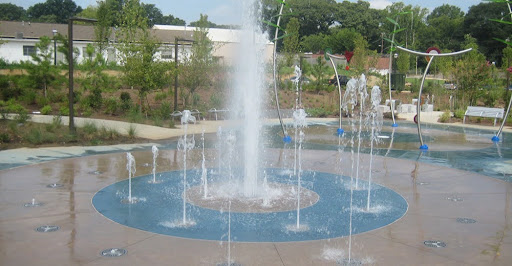
These projects show how public owners use splash pads and interactive water features in parks, town centers, and mixed-use districts.
- Taylor Farm Park in Henrico County, Virginia includes a spray park, mist mounds, and an interactive play stream.
- Powder Springs Community Splash Pad is a community splash pad with interactive water play.
- Peachtree Corners Splash Pad brings a splash pad to a town center setting.
- Woodruff Park includes interactive water features in an Atlanta park.
- Plant Riverside Interactive Water Fountain is an interactive fountain in Savannah’s Plant Riverside District.
For more on why public owners invest in water features, read The Blueprint for Vibrant Public Spaces: Why Landscape Architects Trust Roman Fountains.
Plan Your Splash Pad With Maintenance in Mind
Intake and filtration decisions are easiest to get right while the design is still flexible. Send us your site plan, expected visitor load, and your maintenance team’s priorities, and our design team will recommend an equipment layout that keeps debris under control and cleaning simple.
Quick Answers
How does intake design reduce splash pad maintenance?
Intake design catches leaves, grit, and litter early in the water path, so they do not reach nozzles, pumps, or filters. Staged screens, strainer baskets, and properly sized filtration keep spray features clear and shorten cleaning time.
What causes splash pad nozzles to clog?
Debris from landscaping, visitors, wind, and runoff, including leaves, mulch, sand, grit, and hair, can reach small spray openings if the intake and strainers do not stop it first.
What is a strainer basket on a splash pad?
A strainer basket sits ahead of the pump and catches fine debris such as hair and lint. A basket with a large surface area and a quick-release lid takes less time to clean and extends the interval between cleanings.
What is a duplex strainer?
A duplex strainer has two baskets, so crews can clean one while the other stays in service. That lets the splash pad keep running during routine cleaning.
How often should splash pad strainers be cleaned?
It depends on the site, the debris load, and your health department’s requirements. Many teams check strainer baskets weekly, and a low-flow alert or a pressure reading can signal when cleaning is needed sooner.
Do all splash pads recirculate water?
No. Some designs send used water to drain instead of recirculating it, and local health rules often determine which type a municipality can use. Recirculating systems rely heavily on strainers and filtration to protect equipment.
When should maintenance staff be involved in splash pad design?
During design development, before drain locations, equipment access, and landscaping are fixed. Early input prevents access and cleaning problems that are costly to fix after construction.